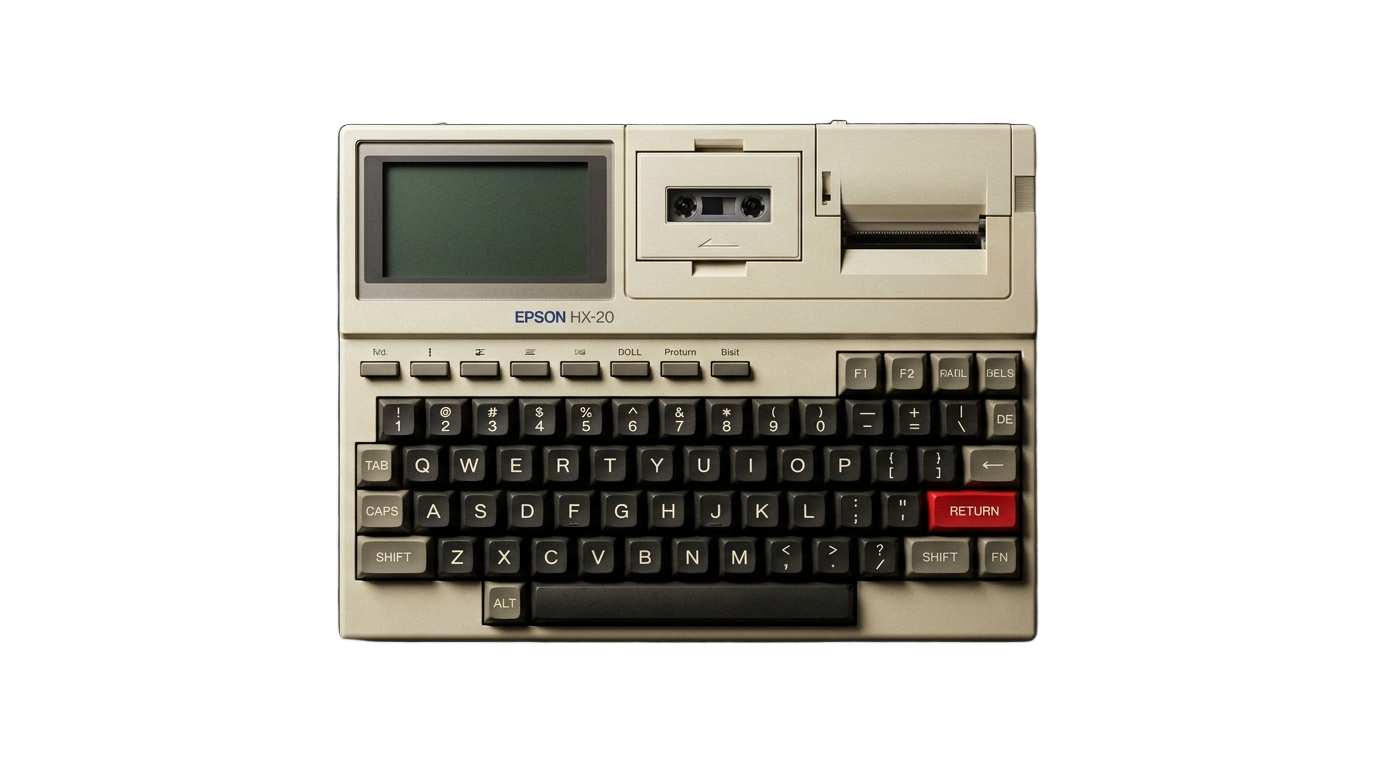
▶ Press the red RETURN key
My father never told me to love the future. He just kept bringing it home.
My father was Senior Editor of Technology at Newsday, and I grew up around every strange new futuristic device. In one of my earliest memories, he is flipping open the back of his brown Toyota Corolla to reveal a car phone, a massive brick of a machine that filled the entire trunk. Back then a phone was something you found in one fixed spot. Ours was aqua blue and bolted to the kitchen wall, with a cord long enough to clothesline anyone traipsing through the kitchen.
He also brought home the Epson HX-20, released in 1981 and now considered one of the world’s first laptops, a QWERTY keyboard with a tiny LCD screen showing four lines of text at a time. And I wrote on that thing. I wrote on it a lot.
When it came to new tech, we were undaunted.
I grew up watching my father treat every new machine like an invitation. The enthusiasm was infectious and frankly lasted a lifetime. The technology is why I gravitated to VFX and CG animation in the first place.
I wanted to be in the rooms where the work kept redrawing what was possible to put onscreen.
When I was a kid, my father brought home an interactive fiction game called Plundered Hearts. You played a woman trapped on a ship, and the only way to escape was to type your way out, one command at a time. I would load the floppy disk, wait for the drive to stop grinding, hold my breath for the blinking DOS prompt, and then talk my way through the dark, one typed sentence at a time, waiting to see what the machine said back.
Decades later, AI arrived, and I sat down to a blank field in a browser and started typing sentences into the dark, again waiting to see what the machine said back.
The hardware had changed. I had been doing this my whole life.
I have worked every role on the most demanding productions in animation and VFX.
Along the way my job was making sure the most ambitious projects reached the screen intact, with the creative vision honored, and without the people on the floor being annihilated. Some days the work is defending the creative conscience of the film, and some days it is saying no. I have learned to tell them apart.
Today I lead my own AI practice.
I produce cinematic shorts, and I build my own tools, including Call Sheet, Prompt Sheet, StackWise and Capture The Light.
They are what happens when a career spent shipping animation and VFX meets a blank browser field. I build for myself first. The tools I make sharpen my visual output and keep my work at the standard my eye demands.
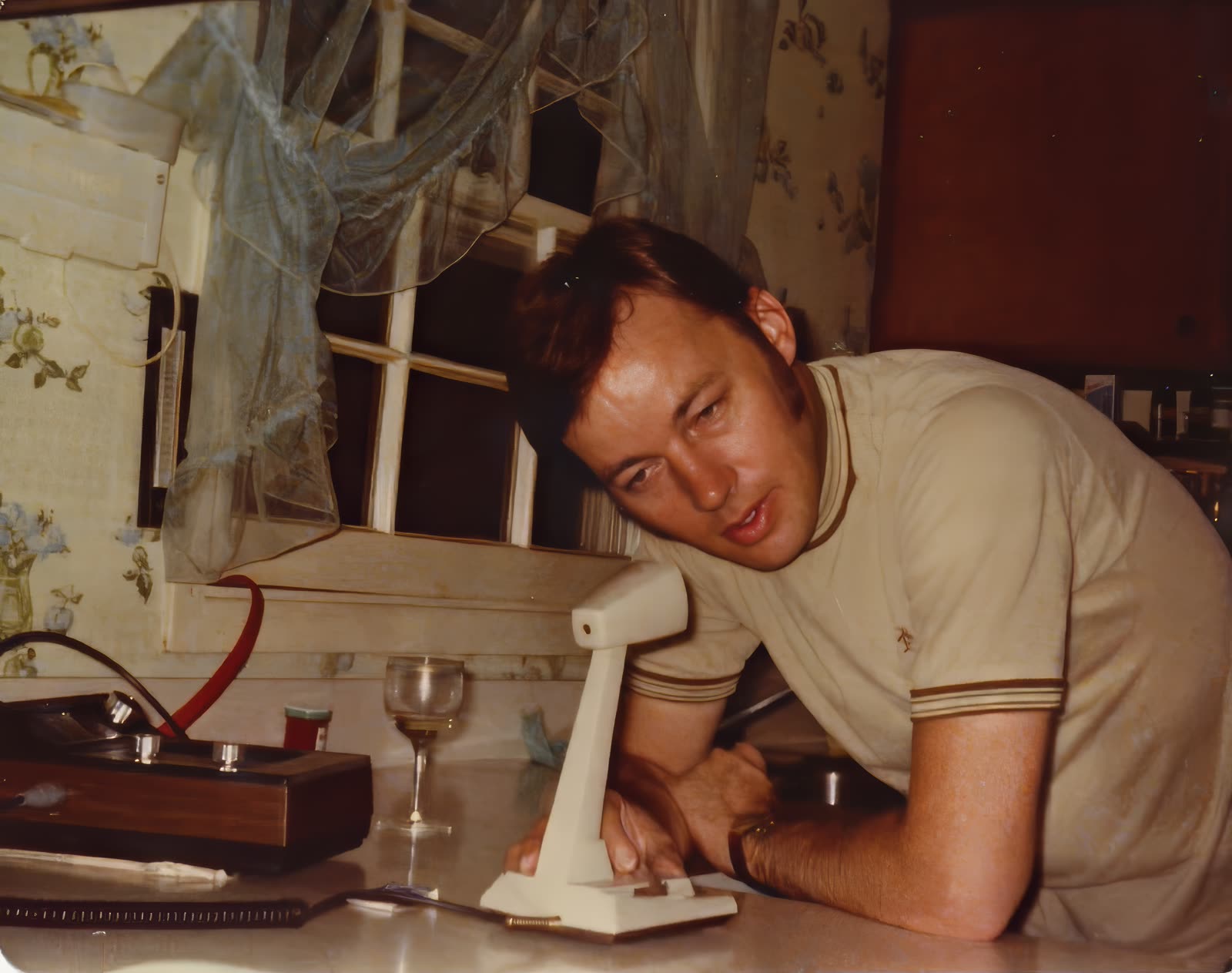
The instincts took a career to earn. The enthusiasm never needed a day.